
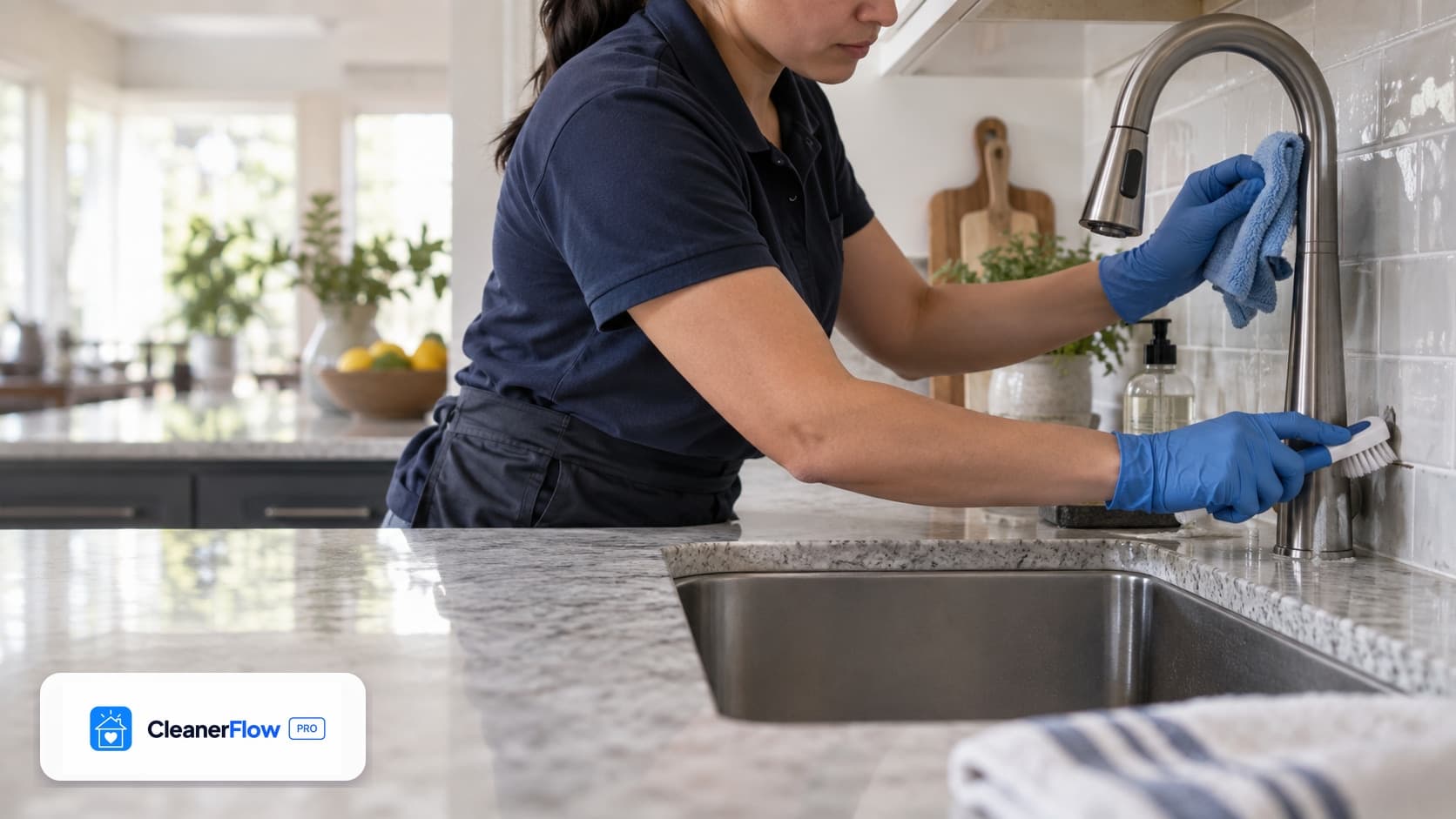
Beyond the Surface: Mastering the Art of Professional Cleaning
Someone asks what you do, and when you say you clean houses, they say, "Oh, that must be nice — no stress, just cleaning." They didn't see you figure out which product wouldn't etch a client's marble counter, or test whether the rug stain was coffee or wine before touching it. Cleaning is a skilled profession, and treating it as unskilled labor hurts everyone who does the work. Here's why the skill is real, and how to talk about it.
The Reality of Cleaning as a Skilled Profession
Cleaning is often perceived as a simple task, but the reality is far more intricate than most people realize. Skilled work is work that calls for judgment, and cleaning calls for it all day long. Each time cleaning professionals step into a job, they make dozens of decisions that require expertise and skill.
Real-World Examples of Skilled Decision-Making
- •Choosing Cleaning Products: When faced with a stained marble countertop, a cleaning professional must determine whether to use an acidic, alkaline, or neutral cleaner. Using the wrong type can etch the surface, leading to costly repairs for the client.
- •Prioritizing Tasks: If a last-minute request arises during a three-hour job, a seasoned cleaning professional knows how to adjust their plan without compromising quality. They might focus on high-traffic areas first or communicate clearly with the client about what can feasibly be accomplished in the remaining time.
- •Body Mechanics: Understanding ergonomics is vital. A cleaning professional must position their body correctly to avoid injury while maximizing efficiency. For instance, when vacuuming, they should use their legs rather than their back to avoid strain.
The Science Behind Effective Cleaning
Cleaning is rooted in chemistry and physics, disciplines that require specialized knowledge. Professional cleaners must understand various cleaning agents and how they interact with different surfaces, which elevates their craft beyond mere tidying.
Understanding Surface Chemistry
- •Acidic Cleaners: These are ideal for dissolving mineral deposits, hard water stains, and rust. While effective for bathroom fixtures, they can be disastrous on natural stone surfaces, leading to irreparable damage.
- •Alkaline Cleaners: These cleaners are effective against grease and organic soil, making them essential for kitchens, but they can harm waxed floors if not used with caution.
- •Neutral Cleaners: While they are safe for delicate surfaces, they may not be as effective on heavy soils, requiring a balance of technique and product choice.
The Importance of Dwell Time
The effectiveness of a disinfectant hinges on its contact time. The EPA tells users to follow the contact time on the label and keep the surface wet the whole time (EPA). A disinfectant sprayed and wiped off right away has not done what the label promises. Incorporating dwell time into the workflow can make a significant difference in the quality of cleaning.
Mechanical Agitation and Ergonomics
Cleaning isn't solely about applying products; it's also about how you apply them. The right amount of scrubbing or buffing can drastically influence results. A skilled cleaner adapts their technique based on the surface type, achieving optimal results while minimizing the risk of damage.
Soft Skills That Set Professionals Apart
While technical knowledge is crucial, soft skills play an equally important role in the success of cleaning professionals. They often work independently in clients' homes, necessitating a unique set of interpersonal skills.
Discretion and Trustworthiness
- •Navigating Sensitive Situations: Cleaning professionals frequently encounter confidential information, from financial documents to personal belongings. Maintaining discretion is paramount, ensuring clients feel comfortable in their homes.
- •Problem-Solving on the Fly: Unexpected challenges can arise, such as a pet that is overly enthusiastic or a sudden plumbing issue. Skilled cleaners are adept at adapting their plans while keeping the client informed, maintaining professionalism.
Building Long-Term Relationships
- •Consistency and Reliability: Many successful cleaning professionals retain clients for years. They remember individual preferences, communicate proactively, and consistently deliver high-quality results, fostering trust.
- •Emotional Intelligence: Understanding client needs requires emotional intelligence. If a client appears overwhelmed during a cleaning session, a professional might ask if they would like to discuss specific areas of concern or adjust the cleaning approach to ease their worries.
The Physical Demands of the Job
To truly appreciate the skill involved in professional cleaning, consider this: attempt to clean multiple homes back-to-back for eight hours. It's not merely about tidying up; it's about lifting, bending, and sometimes even climbing ladders. The physical demands are significant, and cleaning professionals must maintain peak physical performance while under client scrutiny.
Common Mistakes and How to Avoid Them
As with any profession, cleaning professionals should be aware of potential pitfalls:
- •Ignoring Product Labels: Always read product labels to avoid damaging surfaces or creating toxic fumes. Each label provides critical information on usage and safety.
- •Neglecting Body Mechanics: Failing to use proper lifting techniques can lead to injuries. Always bend at the knees, not the waist, when lifting heavy items.
- •Underestimating Time: New cleaning professionals often underestimate how long tasks will take. It's wise to allow extra time for unforeseen circumstances, ensuring quality service.
Why the Myth of Unskilled Labor Persists
The misconception that cleaning is unskilled labor persists, often because it provides convenience for those who consume cleaning services. If the work requires no real skill, then the assumption is that the person performing it deserves minimal compensation and respect.
The Financial Impact of the Myth
- •High Turnover Rates: Swept, a company that makes software for cleaning businesses, puts the industry's average turnover at around 75% a year, with reports as high as 375%, and estimates that replacing one worker costs about $2,000 (Swept). Feeling undervalued is part of why people leave.
- •The Ripple Effect: When skilled professionals leave the industry, it impacts not only their livelihoods but also the quality of service provided to clients, ultimately leading to a decline in the industry's reputation.
Recognizing and Elevating the Profession
At CleanerFlow, we treat cleaning as a skilled profession. In the app, every cleaning professional has a career level, from Associate to Team Lead, earned with a record of well-rated jobs over time. Recognition built on the work itself is what makes room for fair pay and professional respect.
Steps for Elevating Your Career
- 1.Invest in Training: Enroll in specialized courses that cover advanced cleaning techniques, chemical safety, and exceptional customer service to enhance your skills.
- 2.Build a Portfolio: Document your work with before-and-after photos and client testimonials. This evidence can help establish your professionalism and attract new clientele.
- 3.Network: Join local or national cleaning associations to connect with other professionals, gaining insights into best practices and industry standards.
- 4.Seek Feedback: Regularly ask clients for feedback on your services. This not only helps improve your offerings but also strengthens client relationships and trust.
Concrete Steps to Master Cleaning Skills
To become a true master of your craft, consider implementing these practical steps into your routine:
- 1.Create a Cleaning Schedule: Develop a routine that allows you to manage your time efficiently while ensuring no area is neglected. Include high-priority areas and allocate time for each task.
- 2.Use Checklists: Employ checklists for different types of cleaning jobs. For instance, a checklist for residential cleaning may differ from one for commercial spaces. This ensures you cover all necessary tasks and don't overlook details.
- 3.Stay Updated on Trends: Cleaning techniques and products evolve. Regularly research the latest cleaning methods and innovations to keep your skills sharp and your services competitive.
- 4.Practice Ergonomics: Regularly review and practice ergonomic techniques to minimize the risk of injury. Incorporate stretching and strength training into your routine to maintain physical health.
Two Ways Cleaning Professionals Move Up
Two common paths, described as examples rather than as anyone’s story:
- •From residential cleaner to business owner: after years of cleaning homes for someone else, you take a customer service course, start your own business, and use social media to show your work. The clients who find you that way already value attention to detail.
- •From janitorial work to a niche: someone with commercial experience earns a green cleaning certification and builds an eco-friendly service for clients who care about what products come into their home. Specialized knowledge is what sets that business apart.
Common Mistakes to Avoid in the Field
Awareness of common mistakes can save time and enhance your professionalism:
- •Rushing Through Jobs: The desire to complete tasks quickly can lead to oversights and unsatisfactory results. Take the time needed to do a thorough job.
- •Neglecting Client Communication: Keeping clients informed about progress or potential issues fosters trust and satisfaction. Always communicate openly and professionally.
- •Not Reviewing Your Work: After completing a job, take a moment to check your work and ensure everything meets your high standards. This attention to detail can set you apart from competitors.
Conclusion
Cleaning is far more than a mundane task; it is a skilled profession that requires a unique blend of technical knowledge, physical ability, and emotional intelligence. As cleaning professionals, you are not merely providing a service; you enhance your clients’ quality of life. It’s time to dismantle the myth of unskilled labor and acknowledge the invaluable contributions you make every day. With proper training, recognition, and respect, the cleaning profession can continue to flourish, providing skilled workers the careers they deserve. Embrace your role as a cleaning professional and strive for excellence in your craft!
\This article aims to empower cleaning professionals and encourage recognition of their skills, ultimately enhancing the industry's reputation and respect.\
Sources
- •U.S. Environmental Protection Agency — Six Steps for Safe & Effective Disinfectant Use, Step 4: "Follow the contact time… The surface should remain wet the whole time." epa.gov/sites/default/files/2020-04/documents/disinfectants-onepager.pdf
- •Swept — Cleaning industry turnover rate: average turnover around 75%, with reports as high as 375%; replacing one worker costs about $2,000. learn.sweptworks.com/cleaning-industry-turnover-rate