
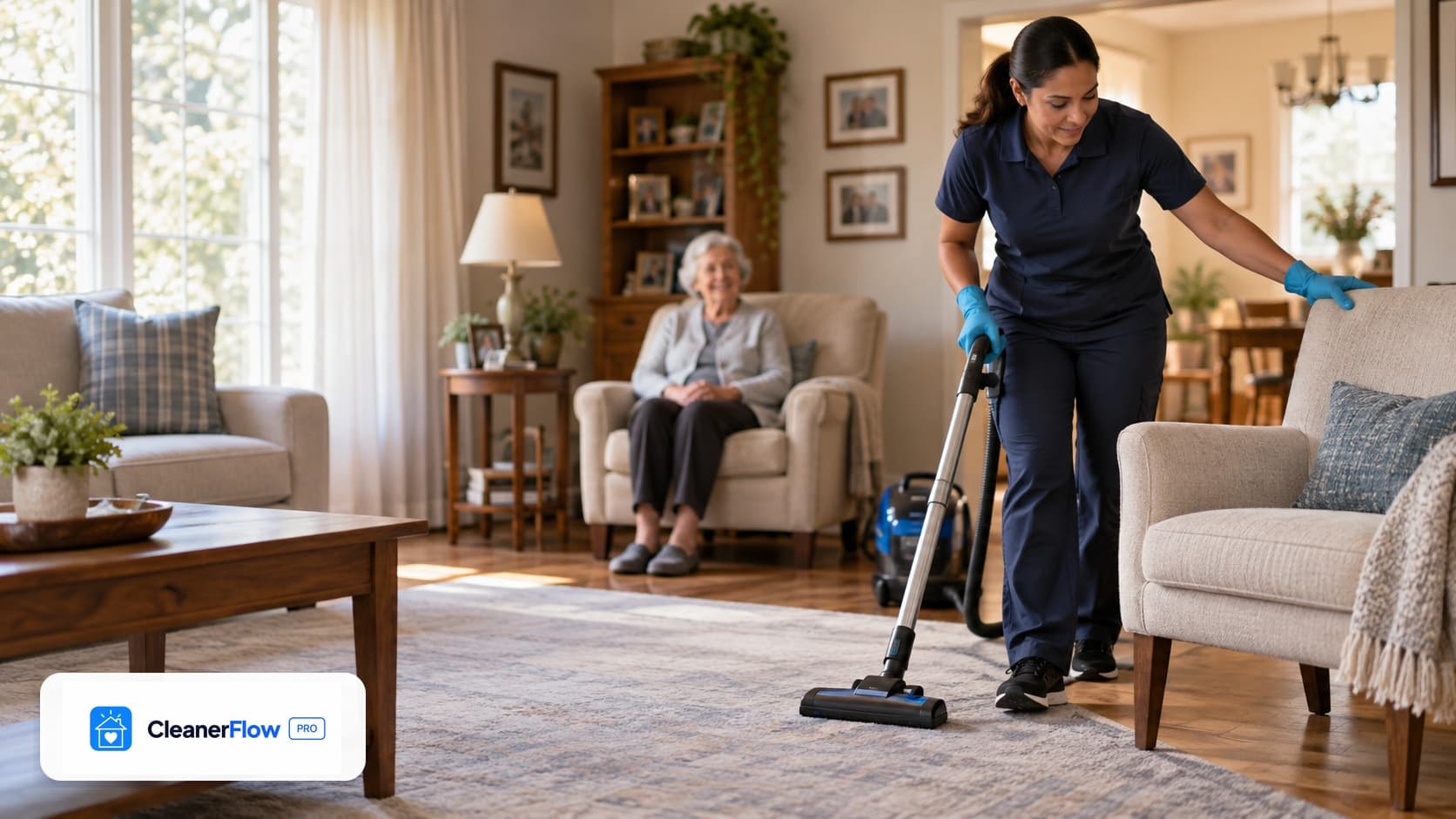
Caring Cleaning: A Comprehensive Guide for Serving Senior Clients
Your longtime client lives alone, and today you notice the mail piling up on the table and dust on the family photo she used to wipe herself. She asks you to leave the rug where it is, even though you both know it slides. With senior clients, you're doing more than cleaning; you're helping someone stay safe and independent in her own home.
Understanding the Unique Needs of Senior Clients
Elderly clients bring a set of unique needs and considerations that require a cleaning professional to adapt their services. These clients may have physical limitations, health concerns, or emotional attachments to their living spaces, all of which can influence how you approach cleaning.
The Importance of Reliability
Elderly clients value reliability above all else. Many may have limited alternatives for maintaining their homes, relying on cleaning services to help them manage their living environments. This trust forms the foundation of a long-lasting relationship. When a client knows they can count on you consistently, it fosters loyalty and appreciation.
For example, consider a scenario where a client has an upcoming family visit. If you consistently show up on time and deliver quality service, they will feel more secure in inviting family members over, knowing their home is clean and welcoming. As a cleaning professional, your reliability is essential in providing comfort and peace of mind.
Emotional and Psychological Factors
Many elderly individuals live alone and may not have regular social interactions. Your visits are not just about cleaning; they also provide crucial companionship and emotional support. This emotional dimension can enhance job satisfaction and create a strong bond between you and your clients.
For instance, take the time at the beginning or end of your cleaning session to engage in light conversation. Ask about their family, interests, or recent events in their lives. This simple act can brighten their day and solidify the relationship, making you not just a cleaner but a friend.
Health Considerations in Cleaning for Seniors
When cleaning for seniors, the stakes are higher due to their unique health concerns. Here’s a deeper look into specific health-related issues you need to be aware of:
Fall Prevention: A Priority
Falls are the leading cause of fatal and nonfatal injuries among adults 65 and older (CDC). As a cleaning professional, your awareness of fall hazards in the home can significantly impact your client’s safety. Here are some specific strategies to implement:
- •Thoroughly dry wet surfaces after mopping to prevent slips. Always carry extra towels, and take the time to ensure that surfaces are fully dry before leaving.
- •Clear pathways of clutter to ensure safe movement around the home. Before you start cleaning, do a quick scan of the room and remove any items that could be tripping hazards.
- •Secure rugs with non-slip mats to avoid tripping hazards. If a rug is loose or curled at the edges, suggest alternatives to the client, such as adhesive carpet strips or non-slip pads.
- •Provide feedback to clients about any areas that could pose a risk. For example, you might say, "I noticed the threshold here is quite high; have you considered getting a small ramp to make it easier to navigate?"
Immune Vulnerability and Disinfection
Elderly individuals often have weakened immune systems that make them more susceptible to infections. Therefore, disinfection should be thorough:
- •Focus on high-touch surfaces like doorknobs, light switches, and kitchen countertops. Create a checklist to ensure these areas are cleaned every time you visit.
- •Use hospital-grade disinfectants or environmentally friendly options like hydrogen peroxide, which are effective yet less harsh on the environment. Always check with the client about any allergies or sensitivities they may have regarding cleaning products.
- •Communicate clearly with clients about what products you are using and why they are chosen for their health benefits. You could say, "I’m using this disinfectant today because it’s effective against viruses, which is important for your health."
Respiratory Sensitivity
Many seniors have conditions such as asthma or COPD. Therefore, it’s crucial to:
- •Choose low or no-fragrance products to minimize respiratory irritation. Labeled cleaning products with “fragrance-free” are ideal.
- •Ensure proper ventilation during and after cleaning to disperse any lingering chemical fumes. Open windows and doors when possible, and encourage clients to stay in a well-ventilated area while you clean.
- •Educate clients on the benefits of certain cleaning products, emphasizing their safety and effectiveness. For example, share information on how vinegar can be a natural disinfectant that is safe for breathing.
Effective Communication with Senior Clients
Building Rapport
Strong communication is essential in establishing trust and rapport with elderly clients. Here are specific ways to enhance your interactions:
- •Address clients respectfully using their preferred titles. For example, use “Mr. or Mrs. [Last Name]” instead of nicknames; this shows respect.
- •Listen actively to their preferences and concerns. Showing that you remember details from previous visits can make them feel valued. For instance, if a client mentioned they love a certain flower, you might bring it up again during your next visit, saying, "I thought of you when I saw those roses at the store!"
- •Use simple language and avoid jargon or overly technical terms that might confuse them. Always clarify any cleaning tasks you plan to perform to ensure they are comfortable with your approach.
Observing Changes in the Home
You may notice changes in your client's living conditions that could indicate health issues. Here’s how to handle it:
- •Gently mention any observations without prying. For example: “I noticed some unopened mail on the table. Is everything alright? I can help you sort through it if you like.”
- •Offer solutions if you see potential hazards, suggesting ways to mitigate risks without being intrusive. For example, you could say, "Would it help if I moved this lamp closer to your favorite chair so you can reach it easier?"
Cleaning Protocols for Senior Clients
Bathroom: The High-Risk Zone
The bathroom is often the most dangerous room for seniors. Here’s how to approach it:
- •Dry all surfaces thoroughly, especially around the shower and tub, to prevent slips. Always use extra towels or a drying agent to ensure surfaces are safe.
- •Check grab bars for stability and report any concerns to the client. If you find any issues, suggest calling a professional to ensure safety.
- •Be mindful of storage spaces — ensure that necessary items are within easy reach to avoid overreaching or straining. For example, keep toiletries on a shelf that is waist height rather than way up high.
Kitchen: A Focus on Safety
The kitchen is filled with potential hazards:
- •Inspect under sinks for leaks or mold growth that may go unnoticed. Make it a habit to note any unusual smells or signs of moisture.
- •Look out for signs of pests, as they can pose serious health risks. If you spot any issues, discuss them with the client sensitively, suggesting solutions like pest control services.
- •Clean around medication areas without moving items out of place to ensure clients can find them easily. Consider using a small, labeled bin for easy identification of medications.
Living Areas: Attention to Detail
Living spaces require a gentle touch:
- •Dust and vacuum thoroughly, paying attention to corners and under furniture where dust bunnies hide. Use attachments to clean hard-to-reach areas without disturbing personal items too much.
- •Respect the arrangement of personal items. Always ask before moving or cleaning around cherished belongings. For example, you could say, "I see you have some family photos here; would you like me to dust around them, or do you prefer I leave them as is?"
Floors: Extra Care Required
Since falls are a significant concern:
- •Mop floors with extra care, ensuring no slippery residue is left behind. Always check the product labels to ensure they are safe for the type of flooring.
- •Use appropriate cleaning tools to avoid causing damage to surfaces while ensuring cleanliness. Microfiber mops are often best for this task, as they effectively clean without scratching.
The Family Component: Communication Beyond the Client
Engaging with Family Members
Often, adult children play a role in coordinating care for their parents. Here’s how to navigate this:
- •Maintain confidentiality about what you observe in the home, only sharing concerns with family if necessary and appropriate. This builds trust and allows clients to feel secure in your services.
- •Communicate relevant information to family members if they express concerns or seek updates on their parents' living conditions. For example, if a family member calls to check on their parent, you might say, "I noticed Mrs. Smith has been a bit more tired than usual, and I’m monitoring it closely."
Building a Referral Network
Creating a network can lead to more clients:
- •Establish relationships with geriatric care managers, social workers, and occupational therapists who work with elderly individuals. Attend workshops or community meetings to connect with these professionals.
- •Attend local community events aimed at seniors and their caregivers, providing informational materials about your services. Bring brochures that outline the benefits of your cleaning services tailored to seniors.
- •Encourage satisfied clients to refer you to friends and family members, emphasizing the importance of a trustworthy cleaning service. You could say, "If you know anyone who might need help keeping their home tidy, I’d be grateful for a referral!"
Why Your Work Matters
Promoting Independence
Your role as a cleaning professional extends beyond hygiene. By helping elderly clients maintain clean homes, you support their independence and quality of life.
- •Consider the emotional impact of your work. For many older clients, staying in their own home is what independence means. This means your care allows them to continue living in familiar spaces where they feel comfortable.
- •Recognize the value you bring. You are not merely cleaning; you are allowing clients to retain their dignity and autonomy. Make it a point to celebrate their achievements, however small, such as when they can keep a task list organized or when they take pride in their home’s condition after your service.
The Professional Opportunity
With the aging U.S. population, there is a growing demand for services tailored to seniors. By positioning yourself as a specialist in senior home care:
- •Differentiate your business from competitors who may not understand the unique needs of this demographic. Tailor your marketing materials to highlight your expertise in senior care and your understanding of their specific challenges.
- •Develop safety-oriented protocols that will make your services more appealing to families looking for reliable care. Create a checklist or a safety guide that you share with potential clients during consultations.
- •Invest in ongoing training to stay current on best practices in elder care and cleaning techniques. Join professional organizations or take online courses that focus on the unique needs of seniors, further enhancing your service quality.
Common Mistakes to Avoid
Underestimating the Emotional Aspect
- •Avoid making assumptions about what clients want. Always ask for preferences and respect their choices, no matter how minor they may seem. For instance, if a client prefers a specific cleaning method, take the time to accommodate their request.
- •Don’t overlook the importance of routine. Maintaining familiar cleaning schedules contributes to a sense of stability for elderly clients. Discuss with clients the best days and times for cleaning, and stick to that schedule as closely as possible.
Not Communicating Changes
- •Always inform clients about any changes to your cleaning routine or products used. Transparency builds trust and reduces anxiety. If you need to change your cleaning supplies for any reason, explain why and ask for their feedback.
Real-Life Scenarios and Scripts
Scenario 1: Addressing a Fall Hazard
- •Situation: You notice a rug that isn’t secured.
- •Script: “Mrs. Johnson, I noticed this rug isn’t secured. Would you like me to suggest some options for non-slip mats? I can help you find some that match your decor too!”
Scenario 2: A New Medication Routine
- •Situation: You see a change in medication placement.
- •Script: “I’ve noticed some new medication bottles on the counter. Is everything okay? If you need help organizing them, I’d be happy to assist.”
Checklists for Cleaning Senior Homes
Pre-Cleaning Checklist
- •Confirm scheduled time with the client. Always check in a day prior to remind them of your visit.
- •Prepare low-fragrance cleaning supplies. Make sure you have everything you need before arriving at the client’s home.
- •Review any previous notes about the client’s preferences or concerns. This ensures you are providing personalized service.
Post-Cleaning Checklist
- •Conduct a final walk-through of the home to ensure all areas are clean and safe. Confirm with the client that each room meets their expectations.
- •Communicate any observations to the client or family, ensuring confidentiality. If you noticed any potential issues, report them sensitively and professionally.
Conclusion: Creating Lasting Impact
Cleaning for senior clients is about much more than dust and dirt. It’s about building relationships, providing safety, and promoting independence. By recognizing the unique needs of elderly clients and adapting your services accordingly, you not only enhance their quality of life but also create a rewarding career. As the demand for specialized cleaning services continues to grow, you have the opportunity to make a significant difference in your community, one well-cleaned home at a time.
Sources
- •CDC — Older Adult Falls Data. cdc.gov/falls/data-research/index.html