
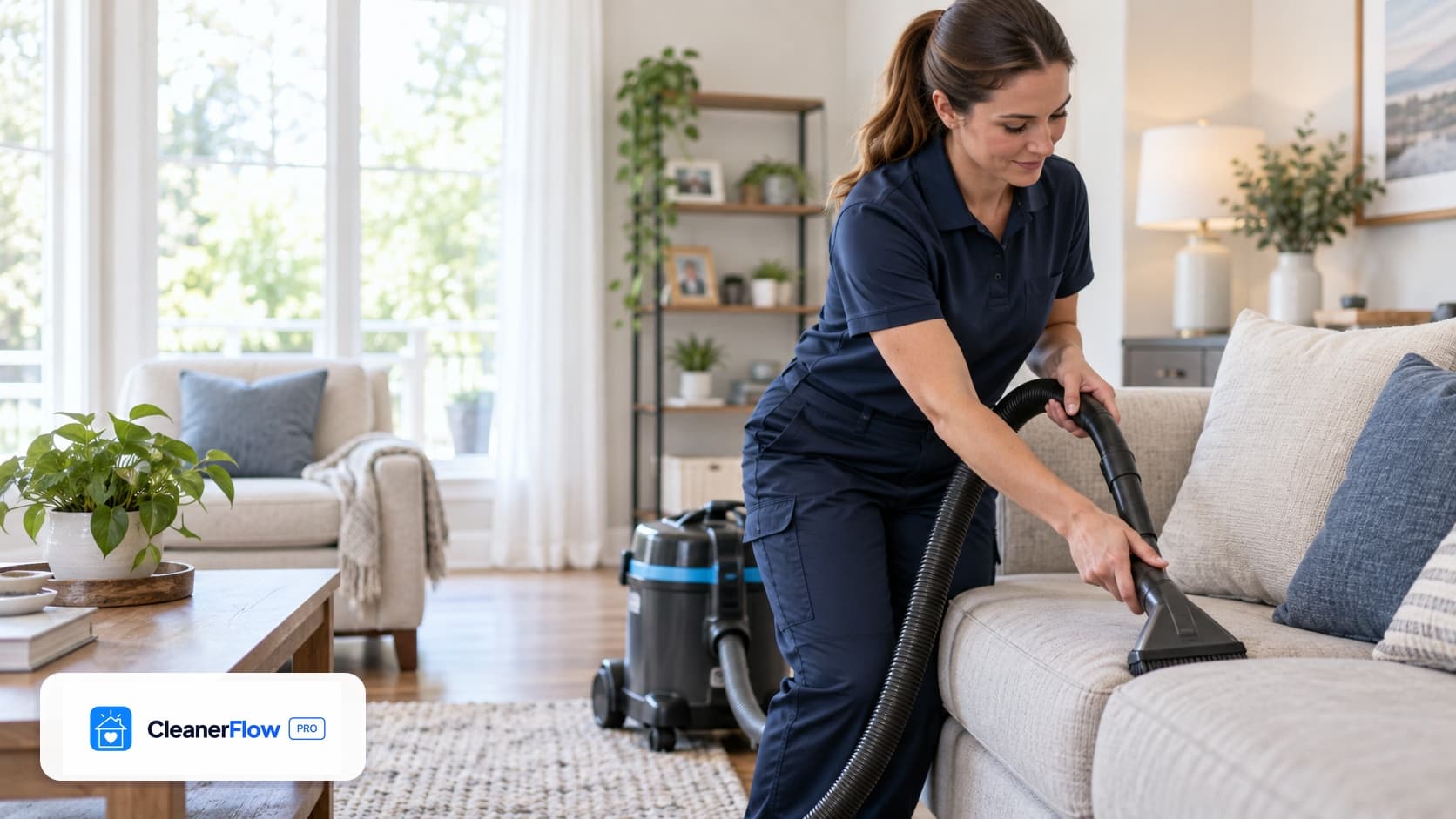
Deep Cleaning for Allergy Relief: A Comprehensive Guide for Cleaning Professionals
On the walkthrough, a new client mentions that her son's asthma flares every spring and asks if your cleaning could help. Suddenly the job isn't about how the house looks — it's about what's still in the air after you leave. A standard clean won't do that. This guide gives you a deep cleaning protocol built to actually reduce allergens, so you can take these homes on with confidence.
The Asthma and Allergy Foundation of America (AAFA) reports that more than 106 million people in the U.S. experience some type of allergy each year. For many allergy sufferers, their home is not a sanctuary but rather the primary source of their discomfort. Standard residential cleaning may create a visually clean space, but hidden allergens—microscopic particles that trigger conditions like rhinitis, asthma, and eczema—often evade typical cleaning techniques.
This guide provides a comprehensive deep cleaning protocol tailored specifically for allergy sufferers, detailing how to effectively reduce allergen loads in sensitive households.
Understanding Indoor Allergens
The Four Primary Indoor Allergens
Understanding the common indoor allergens is essential for any cleaning professional aiming to provide allergy relief. Here are the four primary culprits:
- 1.Dust Mites:
- •Dust mites are the most prevalent indoor allergens. It’s not the mite itself that triggers allergies; rather, it’s the proteins found in their fecal matter and body fragments.
- •These microscopic pests thrive in mattresses, pillows, upholstered furniture, and carpets, feeding on shed human skin cells. They prefer temperatures of 70°F or higher with 75 to 80 percent humidity, and they die when humidity drops below 50 percent (ACAAI). Dust mite allergy affects about 20 million people in the U.S. and may be the most common cause of year-round allergic asthma (AAFA).
- 2.Pet Dander:
- •Composed of tiny flakes of animal skin and dried saliva, pet dander can linger in the air for hours. The primary cat allergen (Fel d 1) is particularly small and lightweight, allowing it to float and adhere to various surfaces.
- •Notably, allergens can remain in a home for six months or more after the animal has been removed.
- 3.Mold Spores:
- •Mold spores develop in damp areas and can be found in bathrooms, kitchens, and other moisture-prone spaces. They can trigger both allergic and inflammatory responses, making mold prevention a crucial aspect of cleaning.
- 4.Cockroach Allergens:
- •Particularly relevant in urban multifamily housing, cockroach allergens come from proteins in saliva, feces, and body parts. These allergens are highly persistent and can contribute to asthma in sensitive individuals.
Evidence-Based Cleaning Behaviors
Effective Cleaning Techniques
To effectively reduce allergen levels, cleaning professionals should implement the following evidence-based cleaning behaviors:
- •HEPA Filtration is Non-Negotiable:
- •Standard vacuum filters capture visible debris but let fine particles—such as dust mite fragments and pet dander—escape back into the air. A HEPA filter can theoretically remove at least 99.97% of airborne particles of 0.3 microns (EPA), making HEPA vacuuming the most impactful cleaning intervention for allergy households.
- •Vacuum Before Dusting:
- •Always vacuum before dusting. Dry dusting tends to redistribute particles into the air, where they can settle back onto surfaces. Vacuuming first removes much of the settled material, allowing for more effective surface cleaning.
- •Mattress Vacuuming Every Visit:
- •Mattresses are often the most concentrated source of dust mites. Vacuum all sides of the mattress with a HEPA vacuum and upholstery attachment. After vacuuming, sprinkle baking soda on the mattress, let it sit for 20 minutes, and then vacuum again. Baking soda absorbs moisture and deodorizes, creating a less hospitable environment for dust mites.
- •Allergen-Reducing Mattress and Pillow Encasements:
- •While you can’t install these encasements, recommending them to clients shows your expertise. These impermeable covers prevent dust mites from accessing the mattress interior and are among the most effective allergen control methods.
- •Damp Wiping, Not Dry Dusting:
- •Use damp or electrostatic microfiber cloths for all surface dusting. This method captures particles rather than dispersing them into the air.
- •High-Frequency, High-Touch Surface Disinfection:
- •For mold allergies, disinfect bathrooms with hydrogen peroxide-based products to kill mold on surfaces. Don’t overlook the bathroom ceiling, a common but neglected area for mold growth.
- •Ventilation During Cleaning:
- •Cleaning can temporarily increase airborne particle levels. Open windows during the cleaning process to help flush out displaced particles. Ideally, clients should not be present during cleaning sessions to minimize their exposure to stirred allergens.
Areas Standard Cleaning Often Misses
Hidden Hotspots for Allergens
Standard residential cleaning often overlooks critical areas that harbor allergens. Here are some of the most commonly missed spots:
- •Ceiling Fan Blades: Dust can accumulate significantly on blades, redistributing when the fan is turned on.
- •Window Treatments: Blinds and curtains can act as dust reservoirs, capturing allergens that settle on their surfaces.
- •Under the Bed: This area is a hotspot for dust mites and allergens, often neglected during cleaning.
- •Upholstery Seams and Tufting: These areas often contain embedded pet dander and dust mites.
- •HVAC Intake Vents: Allergens can accumulate in the HVAC system, contributing to poor indoor air quality.
Positioning Your Allergy Protocol as a Specialty
Marketing Your Expertise
Positioning yourself as an allergy cleaning specialist can attract a unique clientele. Households with allergies or asthma view professional cleaning as a health necessity rather than a luxury. Here’s how to effectively position your services:
- •Craft a Clear Message:
- •Communicate your specialization:
“I specialize in allergen-reduction cleaning for households with allergies and asthma. I utilize HEPA-filtered equipment, damp capture techniques, and a systematic protocol that targets the areas that standard cleaning misses. For allergy households, what you cannot see matters more than what you can.”
- •Highlight Health Benefits:
- •Clients are more likely to invest in cleaning services that contribute to their health. Emphasize the health benefits of your services in your marketing materials.
Building Your Allergy Specialty into Your Professional Brand
Creating a Referral Network
Establishing a referral network within the medical community can significantly enhance your client base. Building relationships with pediatric allergists, pulmonologists, and primary care physicians is crucial. Here’s how:
- •Develop a Value Proposition:
- •Introduce your services to healthcare professionals with the following pitch:
“I specialize in allergen-reduction cleaning for households with documented allergies and asthma. My evidence-based protocols—HEPA filtration, allergen-specific treatment of mattresses and upholstered surfaces, and mold prevention—go beyond standard cleaning. If you have patients whose home environment contributes to their symptoms, I would love to be a resource you can recommend.”
- •Engage with Physicians:
- •Consider reaching out to local physicians with educational materials on how your services can enhance their patients’ quality of life. A single physician’s practice with 500 allergy patients can lead to a steady stream of highly motivated clients who see your service as a necessary part of their healthcare routine.
Client Education: A Value-Added Service
Ongoing Engagement
Providing ongoing education to your clients helps solidify your position as an expert. Share valuable information that extends beyond cleaning sessions:
- •Monthly Messages:
- •Send clients monthly reminders during peak allergy seasons. For example:
“Spring allergy season is here! Remember to change your air filter and use exhaust fans while cooking to keep indoor particulates down. During our next session, I will focus extra attention on your window sills and ceiling fan blades.”
- •Workshops or Webinars:
- •Consider hosting workshops or webinars on maintaining an allergen-free home. This not only positions you as an expert but also deepens the client relationship.
Concrete Steps to Implement the Protocol
Checklist for Allergy Cleaning Sessions
Here’s a checklist to ensure that each session effectively reduces allergens:
- 1.Pre-Cleaning Preparation:
- •Open windows for ventilation.
- •Communicate with the client about specific areas of concern.
- 2.Vacuuming:
- •Use a HEPA vacuum on carpets, upholstery, and mattresses.
- •Pay special attention to under the bed and behind furniture.
- 3.Dusting:
- •Use damp microfiber cloths to wipe all surfaces, including baseboards and light fixtures.
- •Don’t forget ceiling fan blades and window treatments.
- 4.Disinfection:
- •Apply hydrogen peroxide in bathrooms and other mold-prone areas.
- 5.Post-Cleaning Communication:
- •Discuss findings with the client and recommend any additional measures.
- 6.Follow-Up:
- •Send a follow-up message or email about ongoing maintenance and tips to keep their home allergen-free.
Common Mistakes to Avoid
Pitfalls in Allergy Cleaning
While implementing these strategies, be mindful of common mistakes:
- •Rushing the Cleaning Process: Taking shortcuts can lead to missed allergens. Always follow the complete protocol.
- •Neglecting Personal Protective Equipment (PPE): Use gloves and masks, especially if allergens are suspected to be high. Protect yourself as well as your clients.
- •Overlooking Humidity Control: Educate clients on the importance of maintaining indoor humidity levels below 50% (ACAAI) to discourage dust mite and mold growth.
Edge Cases: Unique Scenarios
Special Considerations
Some clients may have unique needs or living situations that require tailored approaches:
- •Clients with Severe Allergies: For clients with extreme sensitivities, consider using hypoallergenic cleaning products and equipment.
- •Homes with Multiple Pets: More frequent visits may be necessary to manage the higher allergen load.
- •Elderly or Disabled Clients: Address accessibility needs when planning cleaning sessions. Consider offering additional services like organizing clutter that may harbor allergens.
Final Thoughts
As a cleaning professional, your role extends beyond merely cleaning surfaces; you are providing a vital service that can significantly improve the quality of life for allergy sufferers. By adopting a specialized approach to allergen reduction, educating your clients, and positioning yourself as an expert in the field, you can create healthier living environments and build lasting relationships with clients.
Through this comprehensive guide, you now have the tools and knowledge necessary to make a meaningful difference in the lives of those who suffer from allergies. Embrace the opportunity to become a trusted resource in your community, and watch your business thrive as you make a positive impact on the lives of allergy sufferers.
Sources
- •Asthma and Allergy Foundation of America (AAFA) — Allergy Facts and Figures. aafa.org/allergies/allergy-facts
- •American College of Allergy, Asthma and Immunology (ACAAI) — Dust Allergy. acaai.org/allergies/allergic-conditions/dust-allergies
- •U.S. EPA — What is a HEPA filter? epa.gov/indoor-air-quality-iaq/what-hepa-filter